MQ-9 Reaper
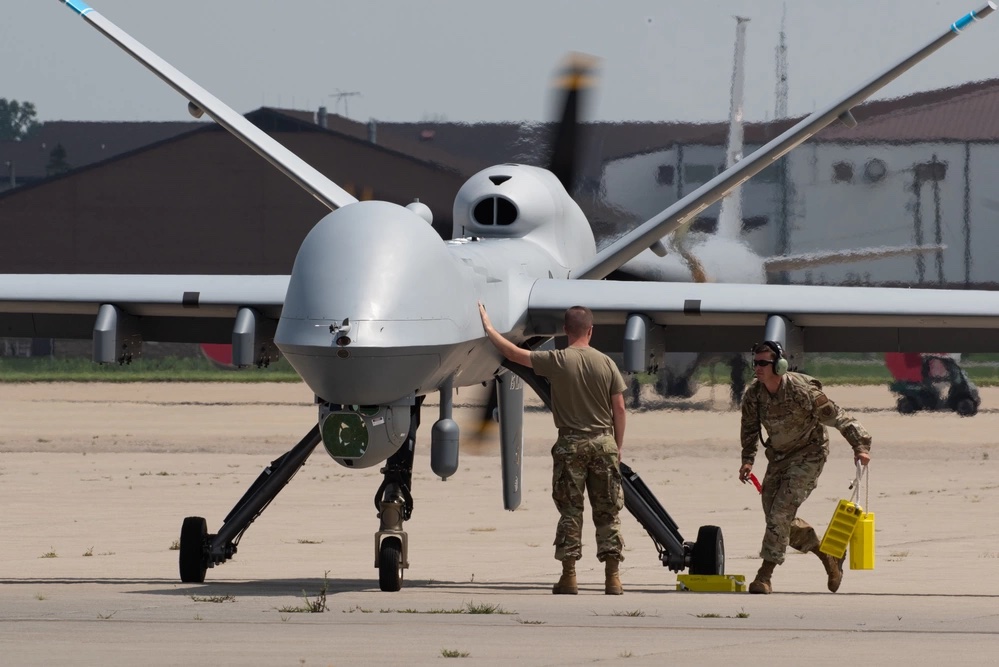
The MQ-9 Reaper is a highly advanced unmanned aerial vehicle (UAV) developed by General Atomics Aeronautical Systems for modern military operations. Designed for both intelligence gathering and precision strike missions, it represents a major evolution in the use of remotely piloted aircraft in warfare.
Unlike earlier drones that were primarily used for surveillance, the MQ-9 Reaper is built as a true multi-role platform. It combines long-endurance reconnaissance capabilities with the ability to carry and deploy precision-guided weapons. This allows it to monitor targets for extended periods and engage them with high accuracy when necessary.
One of the most important features of the MQ-9 is its endurance. The aircraft can remain airborne for many hours, covering large areas without the need for frequent refueling. This makes it extremely valuable for continuous surveillance missions, border monitoring, and tracking moving targets over time.
The Reaper is equipped with a sophisticated set of sensors, including high-resolution cameras, infrared imaging systems, and radar. These systems allow it to operate effectively in both daytime and nighttime conditions, providing clear and detailed information to operators.
Control of the MQ-9 is conducted remotely by trained personnel, often located thousands of kilometers away from the operational area. Through satellite communication links, operators can pilot the aircraft, analyze live data, and make decisions in real time. This significantly reduces the risk to human pilots while maintaining high operational effectiveness.
In addition to surveillance, the MQ-9 can carry a range of weapons, including precision-guided missiles and bombs. This enables it to perform targeted strike missions with minimal collateral impact, making it a key asset in modern military strategy.
Overall, the MQ-9 Reaper demonstrates how unmanned systems are transforming warfare. Its combination of endurance, precision, and advanced technology allows it to perform critical missions efficiently while reducing risk and increasing operational flexibility.